Sleep, Creep & Leap: How Landscapes Mature by Year 3 and Beyond
Landscapes take time to mature, and what you see at the end of a landscape installation is just the beginning of a full, established landscape!
One of the best ways to understand how plants develop over time is the gardening expression “sleep, creep and leap.” It describes the natural progression many perennials go through during their first few years in the garden.
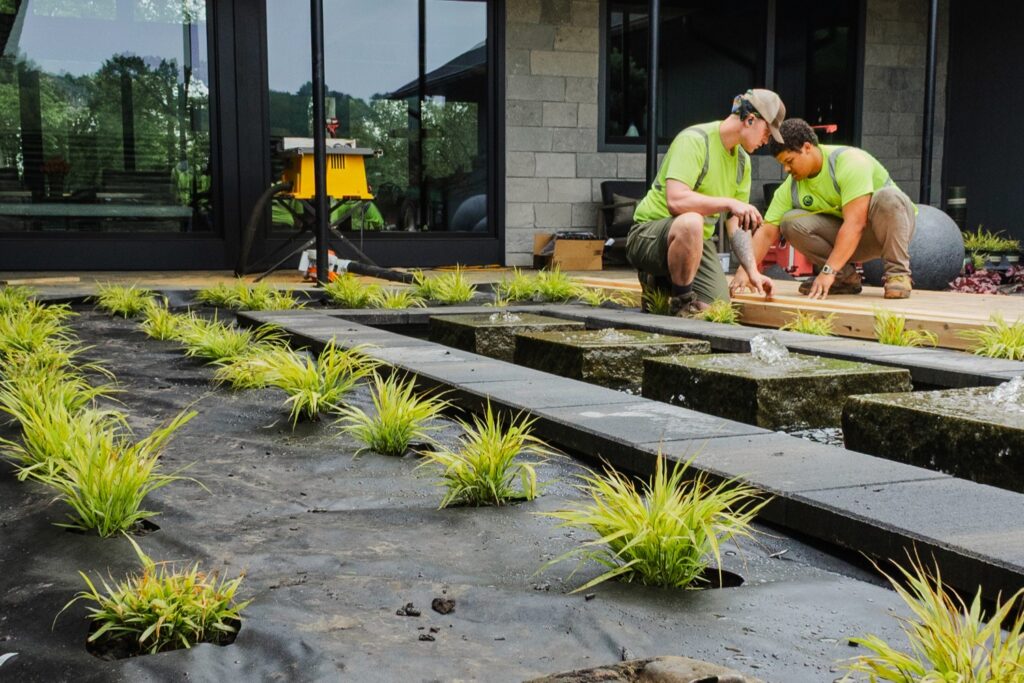
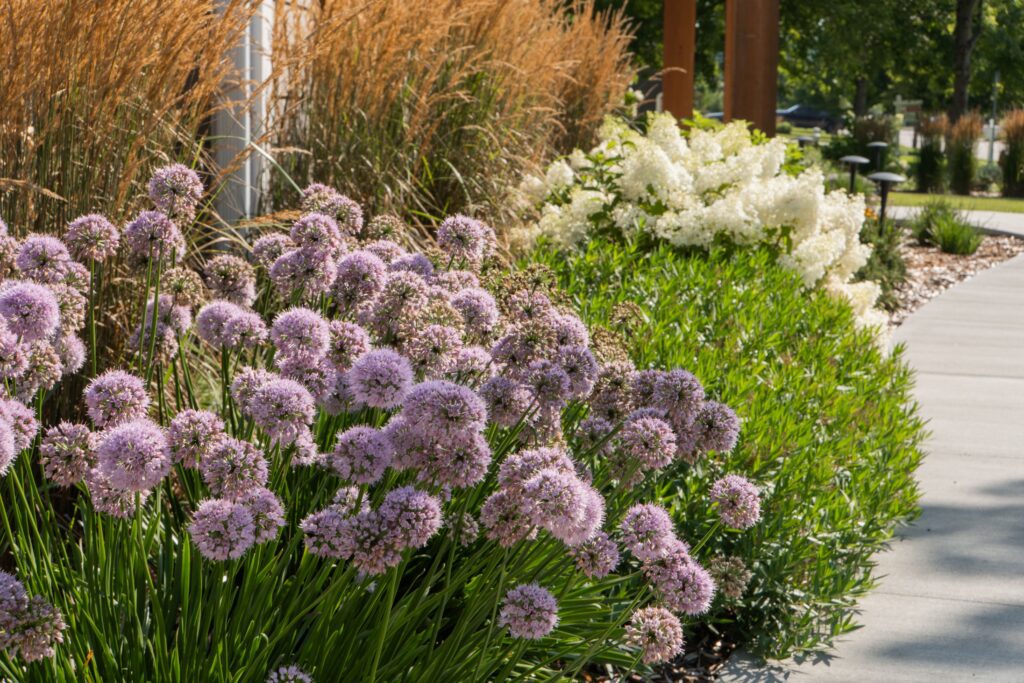
Sargent’s Landscape in 2022, after 4 months of establishment
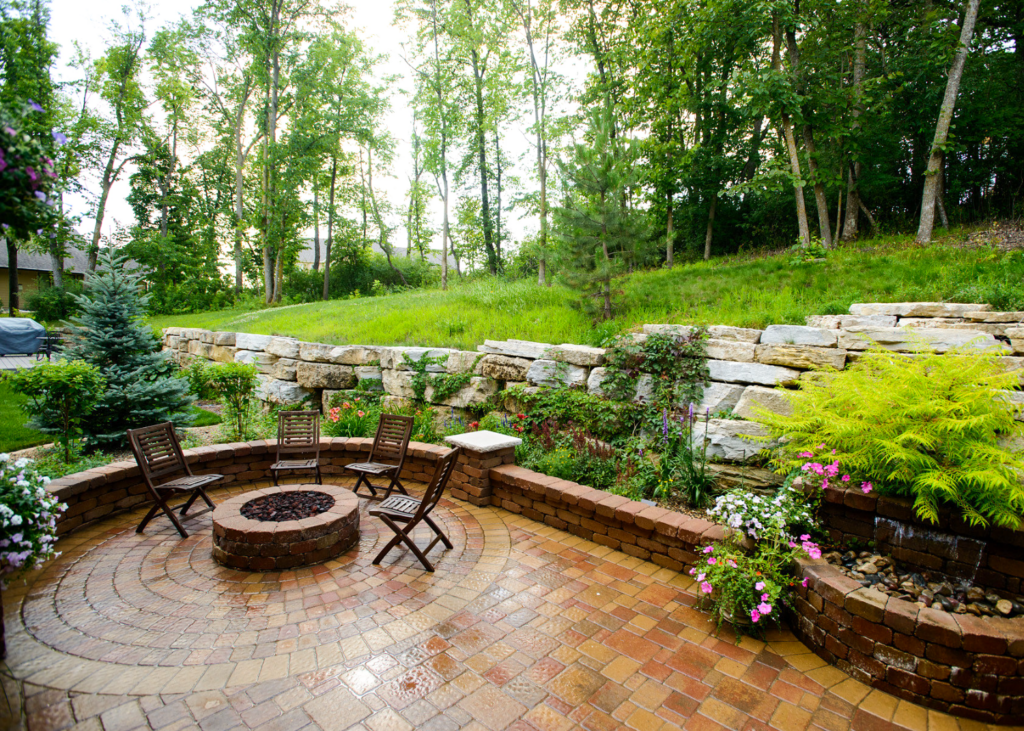
The same landscape after 3 years of growth
Year 1: Sleep
“Sleep” refers to the first season in the garden. After being planted, a perennial’s priority is often establishing its root system. While you will see foliage and, depending on the plant, possibly some flowers, much of the plant’s energy is being directed below ground.
Healthy roots anchor the plant, help it take up water and nutrients, and create the foundation for years of healthy growth. Above ground, the plant may look a little underwhelming compared to its eventual size. That’s okay. A lot is happening where you can’t see it!
Year 2: Creep
“Creep” refers to the second year in the garden. After returning from winter dormancy, the plant begins putting more energy into above-ground growth while continuing to develop its root system.
You can expect more foliage and flowers, and the plant will begin to look more like the specimen you envisioned when it was planted. However, it still hasn’t reached its full size or flowering potential. This is the year when patience starts to pay off.
Year 3: Leap
“Leap” refers to the third year, when many plants really begin to take off. With an established root system and several seasons of growth behind it, the plant can put more energy into producing abundant foliage and flowers.
This is when you can really start to see the landscape come together and appreciate the full potential of the plants you selected.
Planning For The Future
Of course, “sleep, creep and leap” is a general guideline, not a hard-and-fast rule. Different plants grow at different rates, and weather, soil, moisture, sunlight and other growing conditions all play a role. Some plants may fill in quickly, while others take several years to reach their mature size.
This is one of the reasons thoughtful landscape design is so important. When our designers plan a landscape, they aren’t just thinking about what the plants look like on installation day. They’re thinking about what the landscape will look like several years down the road.
Plants come in all shapes and sizes. Some grow tall and narrow, while others can eventually double or even triple in width. Some spread quickly, while others take their time. Knowing the mature size and growth habit of each plant helps our designers determine the right location and spacing.
Without that planning, a landscape that looks perfectly spaced when it is first installed can eventually become overcrowded, with plants competing for sunlight, water and space.
Build for Tomorrow, Not Just Today
A well-designed landscape should get better with age. The goal isn’t just to create a beautiful landscape on day one. It’s to create a landscape that has room to grow, mature and thrive for years to come.
Yes, it takes a little patience. But as gardeners, we know there is always something to look forward to!
Ready to Start Planning For the Future? Let’s Talk.
Reach out to Sargent’s to schedule a site walk or design consult.