The Timeless Appeal of Natural Boulders in Landscape Design
When homeowners think about enhancing their outdoor spaces, they often focus on plants, patios, pathways, and outdoor living areas. Yet one of the most impactful and enduring elements in landscape design is often overlooked: natural boulders. Whether incorporated as decorative focal points, natural outcroppings, seat stones, or structural retaining walls, boulders bring beauty, permanence, and character that few other landscape materials can match.
More Than Any Old Rock
Natural boulders serve both aesthetic and functional purposes within a landscape. As decorative features, they provide year-round visual interest, create natural transitions between planting areas, and establish focal points that anchor the overall design. A thoughtfully placed boulder can create a sense of balance and permanence, helping the landscape feel established and connected to its surroundings.
Beyond their visual appeal, boulders offer significant practical benefits. They are commonly used to manage slopes, reduce erosion, define outdoor spaces, create natural seating areas, and form retaining walls. Unlike many manufactured materials, natural stone often becomes more attractive with age as weathering softens its appearance and allows it to blend seamlessly into the surrounding environment
Understanding Nature’s Building Block
Not all boulders are the same. The stones used in landscape design originate from one of three primary rock classifications: igneous, sedimentary, and metamorphic. Each brings unique characteristics, colors, and textures to the landscape.
Igneous Rocks: Born from Fire
Igneous rocks are formed when molten magma or lava cools and solidifies. These stones are exceptionally dense, durable, and resistant to weathering, making them an excellent choice for retaining walls and other structural applications.
Common examples include granite, basalt, & diorite
Granite is particularly popular in Minnesota landscapes due to its strength, distinctive crystal patterns, and attractive coloration ranging from pink and gray to deep black. Its durability allows it to withstand decades of Minnesota’s challenging freeze-thaw cycles.
Sedimentary Rocks: Layers of Time
Sedimentary rocks develop through the accumulation and compression of minerals, sand, and organic materials over millions of years. These stones often display visible layers and earthy textures that create a softer, more natural appearance.
Common examples include sandstone, limestone, and shale
Sedimentary stones are frequently incorporated into garden settings, water features, and informal landscape designs where their natural layering can add visual interest and warmth.
Metamorphic Rock: Nature’s Transformation
Metamorphic rocks begin as either igneous or sedimentary stone and are transformed by intense heat and pressure deep within the earth. This process creates striking colors, patterns, and textures that make them highly desirable in landscape design.
Common examples include quartzite, gneiss, marble, and slate
These stones often display dramatic mineral banding, unique coloration, and intricate patterns that make them exceptional focal points within the landscape.
Minnesota Stone: A Legacy Shaped by Glaciers
Many of the boulders found throughout Minnesota tell a story that began thousands of years ago. During the Ice Age, glaciers moved across the region, transporting stone for hundreds of miles before depositing it across the landscape. Today’s Minnesota landscapes benefit from this geological journey, providing an incredible variety of native stone materials.
Some of the most common boulders found throughout Minnesota include: • Granite from central Minnesota, known for its durability and distinctive coloration.
• Gneiss, recognized by its striking bands and contrasting mineral deposits.
• Quartzite, one of the hardest and most durable stones available.
• Limestone and Sandstone, valued for their softer textures and earthy appearance.
• Fieldstone, glacially deposited stone commonly found throughout agricultural fields and rural properties.
These stones bring a unique regional character and authenticity that help landscapes feel naturally connected to Minnesota’s environment and history.
The Importance of Texture in Landscape Design
One of the most overlooked aspects of successful landscape design is texture. Great landscapes are not built on color alone. Instead, they rely on a thoughtful combination of texture, form, scale, and contrast to create year-round visual interest.
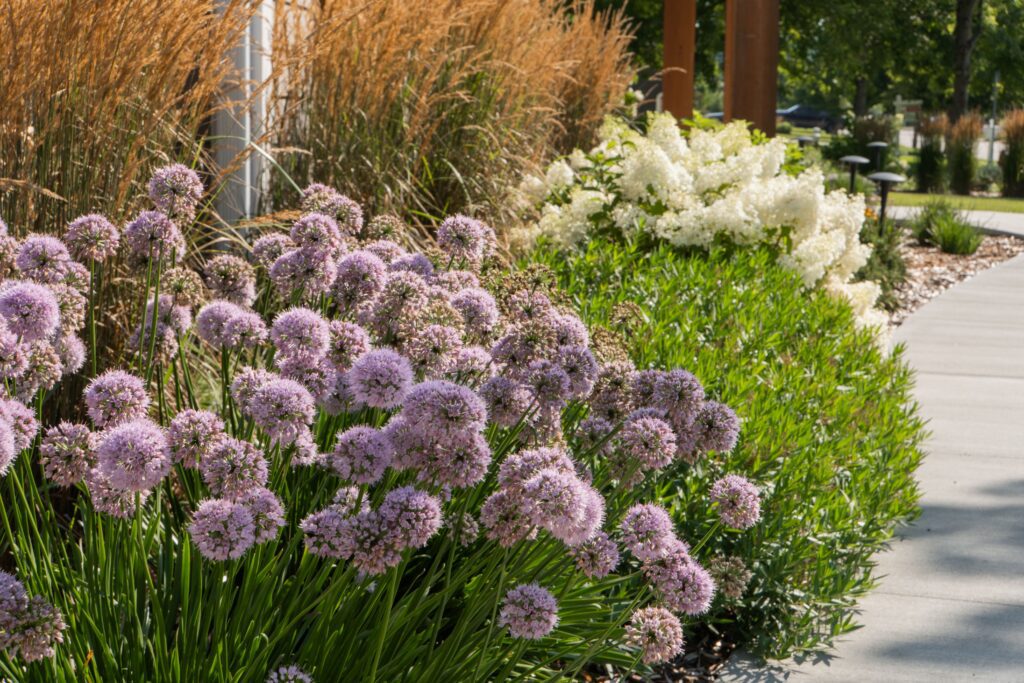
Natural boulders introduce a rugged texture that complements and enhances surrounding plant material. The coarse surface of a weathered granite boulder creates a dramatic contrast against the delicate foliage of ornamental grasses, the broad leaves of hostas, or the colorful blooms of hydrangeas.
Some effective design combinations include: • Rugged granite boulders paired with flowing ornamental grasses for movement and contrast.
• Weathered fieldstone emerging from creeping juniper to create the appearance of a natural Minnesota outcropping.
• Layered sedimentary stone surrounded by low-growing perennials to soften hardscape edges.
• Large boulders nestled among native prairie plants to create a naturalized landscape that appears timeless.
The contrast between stone and plant material is what makes each element more visually compelling. The permanence and mass of natural stone emphasize the softness, movement, and seasonal beauty of plants, while the surrounding vegetation helps integrate stone naturally into the landscape.
Natural Boulders as Retaining Walls
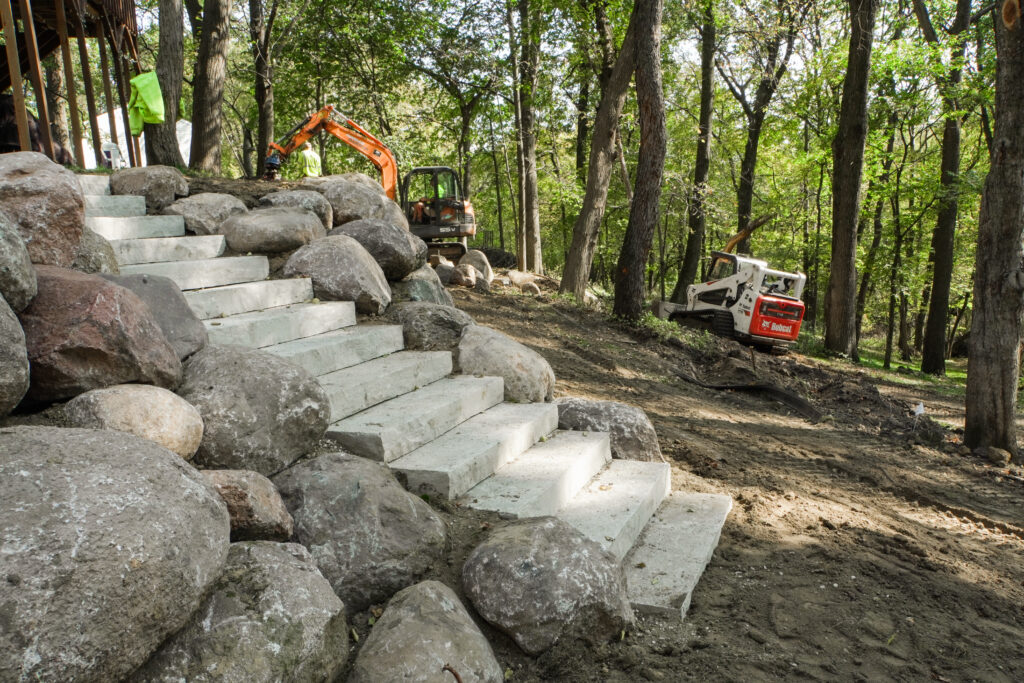
Retaining walls constructed from natural boulders offer a rugged beauty that manufactured wall systems often struggle to replicate. Large boulder walls blend seamlessly into the surrounding environment while providing the structural strength necessary to manage grade changes and prevent erosion.
Benefits of natural boulder retaining walls include: • Exceptional durability and longevity • A natural appearance that complements the surrounding landscape • Reduced visual impact compared to many engineered wall systems • Increased property value and curb appeal • Minimal long-term maintenance requirements
When properly designed and installed, natural boulder retaining walls can remain functional and attractive for generations.
Creating Four Seasons of Interest
One of the greatest advantages of incorporating natural stone into a landscape is its permanence. Flowers bloom and fade, trees mature, and design trends evolve, but natural stone remains beautiful year after year.
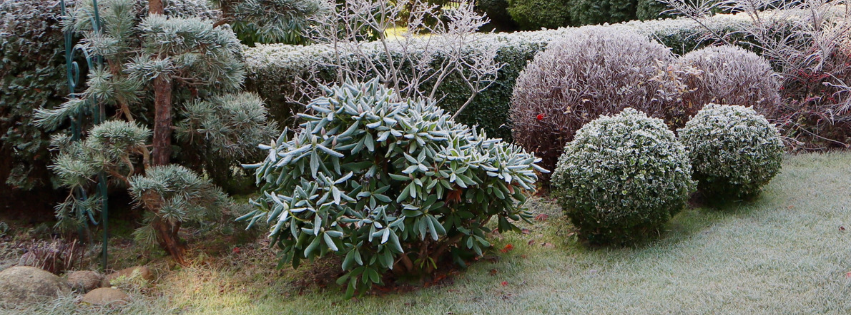
In Minnesota, where landscapes experience dramatic seasonal changes, boulders continue to provide structure and visual interest throughout the winter months when many plants are dormant. Snow-covered boulders can be just as striking as flowering gardens in midsummer.
By combining carefully selected stone with trees, shrubs, ornamental grasses, and perennials, homeowners can create landscapes that remain attractive through all four seasons. In many cases, natural boulders become the framework upon which the entire landscape is built.
Image Source: Chicago Botanical Gardens
A Lasting Investment in Beauty and Function
Natural boulders are far more than decorative rocks. They are geological works of art that add structure, durability, function, and character to the landscape. Whether serving as a retaining wall, anchoring a planting bed, defining an outdoor gathering space, or creating a dramatic focal point, boulders provide a timeless beauty that complements Minnesota’s natural environment.
At Sargent’s, we view every design as an opportunity to create a landscape that feels natural, enduring, and unique to the property it serves. By thoughtfully combining Minnesota stone with carefully selected plant material, we create outdoor spaces that are beautiful, functional, and connected to the land for generations to come.
Interested in incorporating natural boulders into your landscape? Contact Sargent’s to learn how natural stone can enhance the beauty, functionality, and long-term value of your outdoor living space.
Ready to Start Planning For the Future? Let’s Talk.
Reach out to Sargent’s to schedule a site walk or design consult.